Global – NSAN delivers GAIN programme
Global


Summary
Constructionarium Ltd worked with the University of Calgary’s Schulich School of Engineering to deliver an intensive five-day experiential learning programme in Norfolk, England, for 20 undergraduate civil engineering students from Canada. The February 2026 programme was the first University of Calgary – and first Canadian – cohort to participate in Constructionarium.
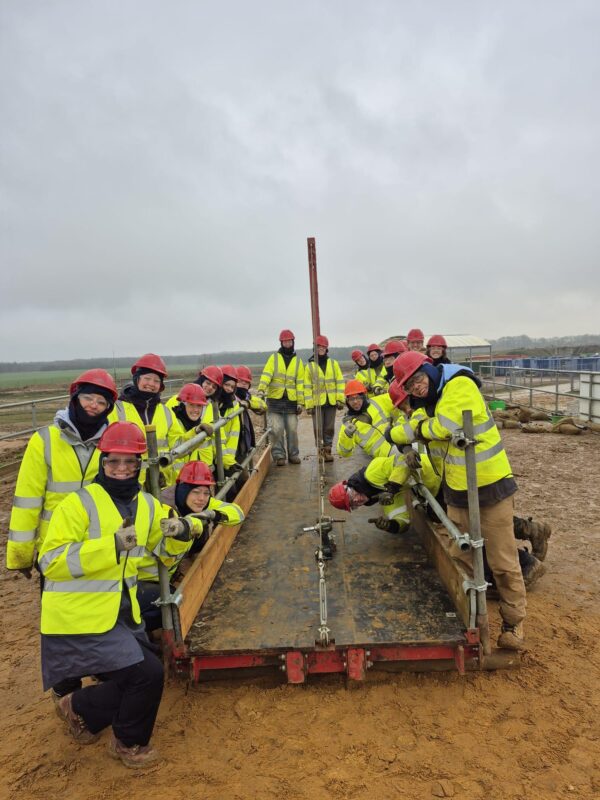
As part of the University’s Global Experiences Initiative, the students travelled to the UK to apply their academic engineering knowledge in a safe, purpose-built construction environment. Working as a contractor team, they were challenged to construct a 12-metre cable bridge inspired by the Millau Viaduct in southern France.
The programme replicated the realities of a live construction project. Students took responsibility for roles including project management, surveying, engineering, health and safety, planning and site delivery. They worked with Constructionarium as the client, managed site processes and documentation, coordinated resources and responded to the practical challenges that arise when turning a design into a physical structure.
The team successfully completed the bridge within the five-day programme. The experience enabled students to connect classroom theory with construction practice while developing technical understanding alongside leadership, communication, teamwork, problem-solving and project-management skills. It also provided international exposure to UK construction practices and strengthened links between UK skills provision and Canadian engineering education.
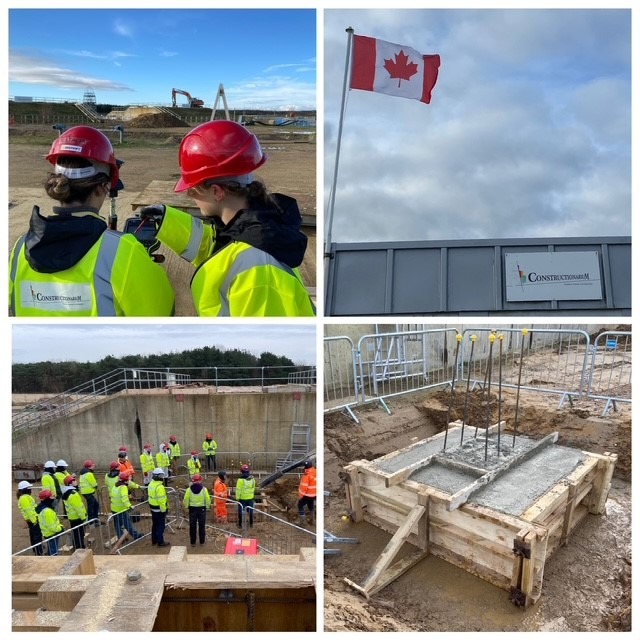




Constructionarium offers universities, colleges and employers an immersive way to turn engineering and construction theory into practice. At our purpose-built 19-acre site simulator in Norfolk, UK, learners work as a “Contractor” team to deliver real, scaled construction projects for “Clients” in a safe and supported environment.
Our core experiential programmes develop technical understanding alongside the skills that determine workplace readiness: project management, leadership, communication, teamwork, problem-solving, health and safety awareness and commercial thinking. Programmes can support civil engineering and wider built-environment students, early-career professionals and industry teams, and can be tailored to specific learning outcomes.
For international partners, Constructionarium provides a distinctive UK-based learning experience that combines practical construction, professional behaviours and exposure to UK industry practice. We can work with institutions to design a cohort programme around academic calendars, learner numbers and required outcomes.
Read about Constructionarium Ltd.
Civil engineering education provides students with strong theoretical and analytical knowledge, but opportunities to experience the full realities of delivering a construction project can be limited. The University of Calgary identified an opportunity to complement its academic programme with an international, immersive experience that would allow students to see how engineering decisions translate into construction activity.
The challenge was to provide a meaningful practical experience within a short university break, while ensuring students could learn safely and take genuine responsibility for delivery. The cohort had strong academic foundations but, as is common for students at this stage of their studies, many had limited direct construction-site experience.
The programme therefore needed to go beyond a conventional site visit or demonstration. Students needed to make decisions, allocate roles, communicate as a team, understand construction terminology and methods, manage health and safety requirements, work with project documentation and experience the pressures of delivering to a client, programme and budget.
Constructionarium’s purpose-built site simulator at Bircham Newton provided the environment to achieve this. The plan was to place the students in the role of the contractor and give them ownership of a real, scaled construction project. Supported by Constructionarium’s experienced team and University of Calgary faculty, they would progress from initial planning and role allocation through surveying, setting out and construction to completion of the bridge. The programme was deliberately designed so that learning came not only from successful activities, but also from resolving the practical issues, communication challenges and changing circumstances encountered during delivery.
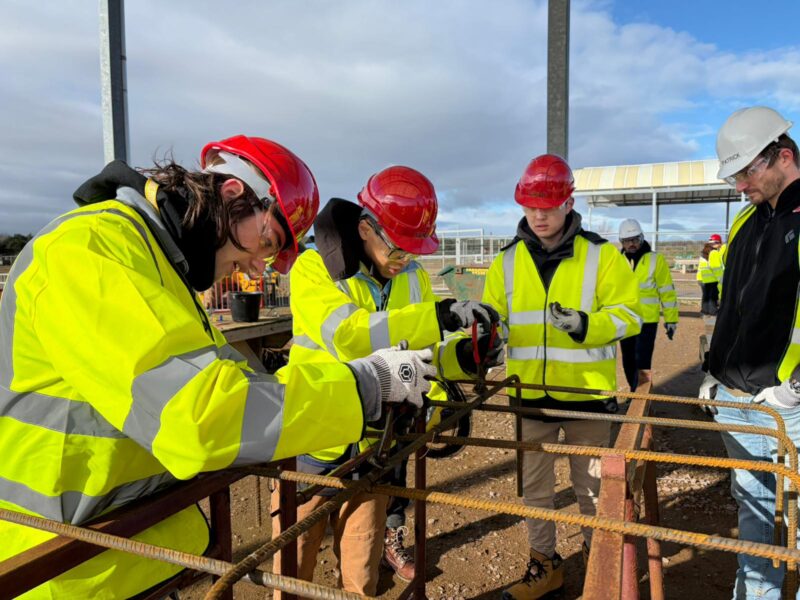
Constructionarium delivered a five-day practical construction programme based around its Millau cable bridge project. Rather than observing construction, the 20 University of Calgary students became the project team and were responsible for delivering the structure.
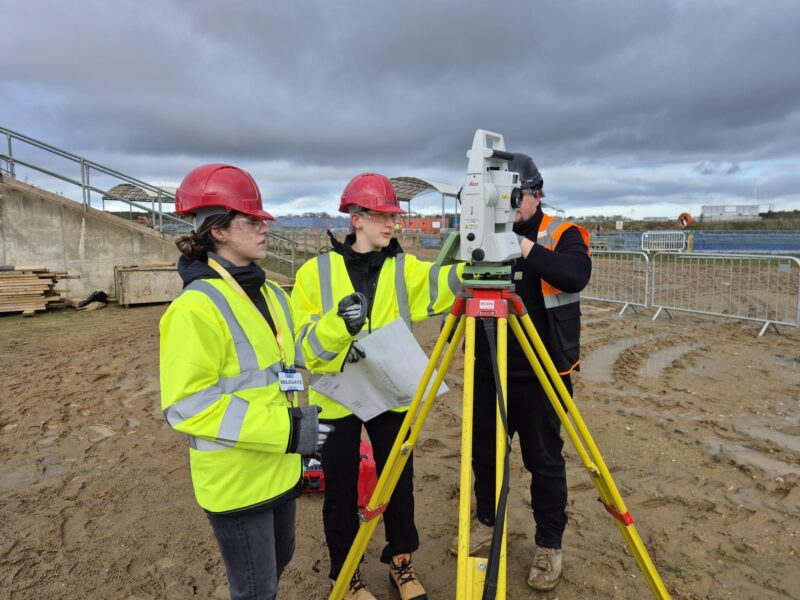
At the start of the programme, students were briefed as a contractor team and allocated project roles. They reviewed the project requirements, planned the work and established how they would organise themselves. Throughout the week they applied engineering principles in a live site environment, undertaking activities such as surveying and setting out, interpreting drawings, coordinating materials and resources, sequencing construction operations and monitoring progress.
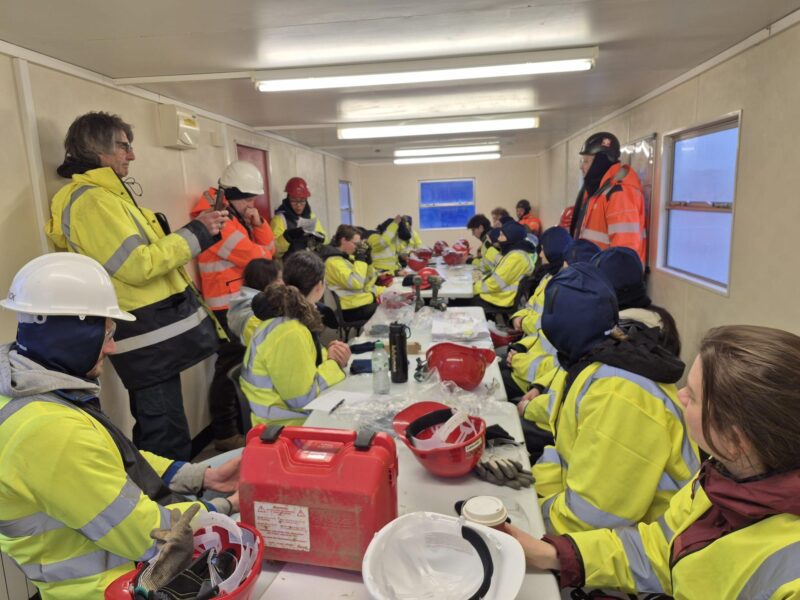
The programme also embedded the wider responsibilities that accompany technical engineering. Students participated in client meetings, worked with construction documentation and site processes, managed health and safety requirements and experienced the importance of clear communication between different project roles. Constructionarium staff acted as the client and mentors, providing a controlled environment in which students could make decisions, solve problems and learn from the consequences without removing their ownership of the project.
The intervention combined technical skills with the behaviours employers require from graduate engineers: teamwork, leadership, communication, resilience, commercial awareness, planning and problem-solving. The residential and international nature of the programme further strengthened team development and exposed students to UK construction practice.
By the end of the five days, the students had transformed academic knowledge into a completed 12-metre cable bridge, providing a tangible demonstration of both their engineering learning and their ability to operate as a project team.
The University of Calgary cohort successfully delivered the 12-metre cable bridge within the five-day programme, but the principal impact was the development that took place behind the finished structure. Students left with a clearer understanding of how engineering theory, construction processes, health and safety, project management and teamwork interact on a real project.
The University’s subsequent published case study records strong learner impact. Students described how the experience gave physical context to engineering concepts and construction terminology, while the student project manager highlighted a new understanding of the purpose and importance of site paperwork and safety processes. University faculty also reported that the learning would carry into internships, capstone projects and students’ future careers. Some participants indicated plans to return to the UK to seek industry placements.
For the University of Calgary, the programme demonstrated a model for adding practical, international experiential learning to civil engineering education. It was the University’s first Constructionarium cohort and the first Canadian cohort to participate, creating a foundation for continued UK-Canada collaboration.
The wider value is the development of work-ready engineers who better understand the practical consequences of engineering decisions before entering industry. Students gained confidence, maturity, technical context and an appreciation of the wider societal role of civil engineering.
There is also value back to the UK. The programme showcases UK expertise in engineering education and experiential skills development to an international market, strengthens relationships between UK industry and overseas universities, and introduces future Canadian engineers to UK construction methods, standards and professional practice. It demonstrates an exportable UK skills solution that can support universities and employers internationally in closing the gap between academic learning and workplace readiness.